Amiri Letter-Print Logo T-Shirt Review: Loose-Fit Cotton Tee Tested
We ordered and tested the Amiri letter-print logo T-shirt: 100% cotton at a stated 180–250 g/m², loose crew-neck cut, S–XXXL across a very long colour run. Print adhesion, logo shade and sizing remain the open questions.
Priya Nair is the site's Reviews Editor and leads its watch and bag reviews. Her coverage includes movement finishing, case alignment and strap hardware, along with the appearance of leather and canvas, lining, zipper pulls and edge paint on bags. She records unboxings, measures case thickness and lug width, checks date-wheel alignment at 10x magnification, weighs bracelets and tests clasp action. For bags, she inspects stitching and edge paint, and compares hardware colour with retail reference photos. Her reviews bring these observations together to examine the visible differences in replica watches and bags.
Hands-on score 4.2 / 5
Editor score 4.2 / 5
In this article
How we tested
On the bench in Rotterdam we took flat chest, shoulder and length measurements, weighed the shirt on a digital scale, inspected print edges and collar ribbing under a 10x loupe, ran three cold washes to watch for cracking or fade, and compared lettering shade against retail reference photos.
Sources and notes
-
Catalog product page
Product listing verified on 2026-10-12.
Editor verdict
A mid-weight 100% cotton loose-fit crew neck with a clean collar, tidy seams and a dye-printed chest logo. Construction impressed us at $8.36; print shade and long-term print durability are the parts we cannot guarantee.
| What works |
|
|---|---|
| Watch-outs |
|
Who this suits
Buyers who want a cheap, mid-weight cotton logo tee in a loose cut, and who will confirm flat measurements and request a daylight print photo before shipping.
Who should skip
Anyone who needs verified colour accuracy or expects the print to stay flawless for years, and buyers who will not chase measurements with the agent.
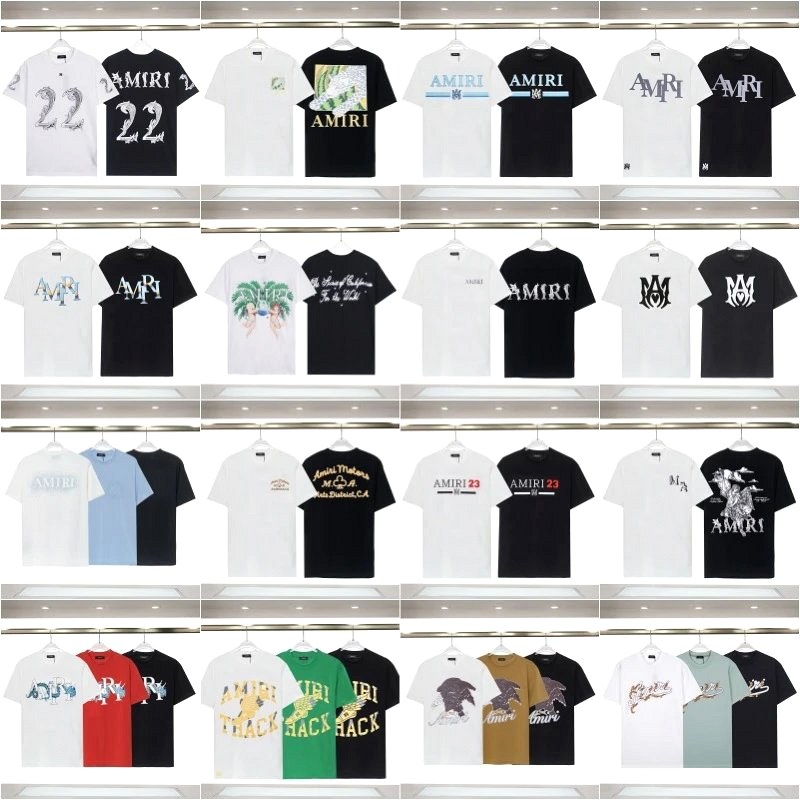
This is the plainest version of an Amiri staple: a short-sleeve pullover crew neck with the brand moniker printed across the chest, sold as a loose-fit cotton tee in a colour list long enough to be its own catalogue. We ordered one through the Kakobuy agent, ran it over the bench in Rotterdam, and washed it three times before writing this up.
What we ordered
| Spec | Listing detail |
|---|---|
| SKU | 7715755319 |
| Reference price | $8.36 USD (listing showed $9.87 before discount) |
| Fabric | 100% cotton, plain weave |
| Stated weight | 180 g (inclusive) to 250 g (exclusive) per square metre |
| Cut | Loose fit, crew neck, short regular sleeve, pullover |
| Sizes | S, M, L, XL, XXL, XXXL |
| Dye-based letter-print logo and numeric graphics, front chest | |
| Season | Four-season by the seller's copy; realistically a layering tee |
| Availability | In stock at the time of ordering |
Fit and sizing
The seller describes a loose cut and admits a 1–3 cm measurement tolerance, which is honest and also the reason we ignored the size chart entirely. Buyers of Amiri tops generally say the brand runs slightly small and recommend going up one size for a looser feel, and our sample followed that pattern: the shoulders and chest sat close to a standard large rather than a generous one, while the body stayed straight through the hem.
Retail guidance is not much help here. Some stockists list comparable Amiri logo tees as fitting true to size, others say size down, and others say the piece runs small — the discrepancy tracks the difference between the brand's regular and oversized blocks. Treat any single sizing guide as a starting point and get a flat chest and length measurement for the exact size you want before you confirm the order.
Fabric and construction
The cotton is a plain-weave jersey with a dry, slightly matte hand. On our postal scale the shirt landed inside the stated mid-to-heavy band, and it hangs with more body than a budget blank — a quality that shows up in how the front panel falls rather than in any laboratory number. Reviewers of the genuine article consistently describe Amiri tees as heavier than a standard cotton tee, and our sample reads the same way by feel.
Neck ribbing is the first place cheap tees fail. Ours held a firm, even collar through three washes with no ripple or flare, shoulder seams were cleanly taped at the neckline, and the hem stitch was straight with consistent stitch density. No loose threads or skipped stitches appeared at the side seams. That is a solid result for the price band and the main reason this tee scores as well as it does.
The print is the whole risk
Everything else on this shirt is a commodity crew neck. The dye-printed lettering across the chest is why anyone buys it, and it is also the only component with a documented failure history. A buyer who purchased an Amiri T-shirt from an authorised retailer left this account:
"It has only been worn a handful of times, always stored on a hanger and dry cleaned as instructed. Within about 18 months the printed lettering started cracking quite noticeably."
That is a single report on a retail garment, not a failure rate and not evidence about this listing. We can only report what we saw: after three cold-water washes inside out and air drying, the print on our sample stayed intact with no flaking or edge lift, and the printed surface did not feel stiff or plasticised where it met the cotton. Keep in mind that dye-based print longevity depends on wash temperature, detergent strength and tumble drying far more than on the print itself.
Colour verification is genuinely difficult
One buyer found that their Amiri shirt developed a metallic smell after a few months of wear that persisted through washing. We noticed no odour out of the bag or after our washes, but it is a second data point that points at inconsistent fabric finishing across the supply chain rather than at one specific defect.
Logo shade is the harder problem. In QC discussions, buyers argue about whether the printed logo should be a brighter yellow or the more faded tone seen in some photos, which makes it nearly impossible to grade a colourway against a reference image. Print colour is also the most camera-sensitive detail on any garment: white balance, phone processing and warehouse lighting all shift it. Ask the agent for a daylight photo of the exact colourway you ordered, not a rendered image.
How we would order it
- Pick your colourway from the option list first, then request a flat chest and length measurement in your chosen size — the 1–3 cm tolerance cuts both ways.
- Ask for a daylight photograph of the front print rather than the studio shots, so you can judge shade and print opacity.
- Check the QC photos for collar ribbing shape and print edge definition; those are the two details that separate a good unit from a rushed one.
- Wash cold, inside out, and air dry. Heat is what kills dye-based printing.
Where it lands on value
At $8.36 USD before agent fees and international shipping, the construction we received is comfortably ahead of the price. You are paying for a cotton tee with a real logo print, not for retail-grade print durability or a guaranteed colour match. The fabric weight, collar and seams are the parts we could verify and they held up; the print shade and its long-term behaviour are the parts nobody can verify from photographs. Judge it on that split and it is a sensible buy.
Does the Amiri letter-print logo T-shirt run true to size?
Guidance conflicts. Some retailers list comparable Amiri logo tees as true to size, others say size down or up; buyers generally find Amiri tops run slightly small. Our sample fitted close rather than generous. Request flat chest and length measurements before ordering — the listing allows a 1–3 cm tolerance.
Will the printed logo crack?
Our sample showed no cracking, flaking or edge lift after three cold washes. Separately, a buyer who bought an Amiri tee from an authorised retailer reported lettering cracking within about 18 months despite limited wear. That is one report, not a failure rate. Wash cold, inside out, and air dry.
Why does the logo colour look different in photos?
Buyers in QC threads disagree on whether the logo should be a brighter yellow or a more faded tone, and print colour shifts badly under warehouse lighting and phone processing. Ask your agent for a daylight photo of the exact colourway rather than judging from listing images.